

North American Oil Ressources
November 14, 2024
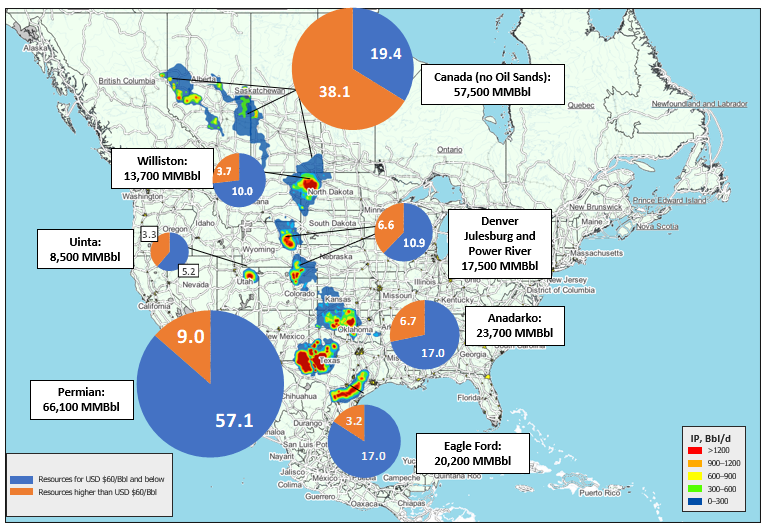
Incorrys’ assessment of North American remaining oil and lease condensate ressources in major producing bassins broquen down between ressources at <USD $60/Bbl and >USD $60.
Total remaining ressources for four major US Tight Oil bassins (Permian, Williston, Niobrara, and Eagle Ford) is estimated at 117,300 MMBbl, 81% at full cycle costs of USD $60/Bbl and below.
North American Oil Ressource Life
November 14, 2024
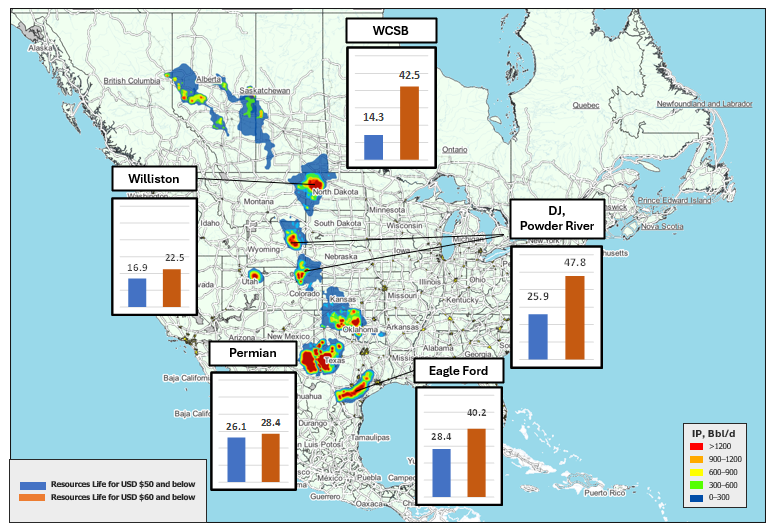
This chart shows the ressource life, in years, for major North American producing bassins at full cycle costs below USD $50/Bbl and USD $60/Bbl.
The US Permian has the lowest ressource life compared to other US Tight oil bassins at 26.1 years for a cost of USD$60/Bbl and below.
International Oil Rig Couns
November 19, 2024
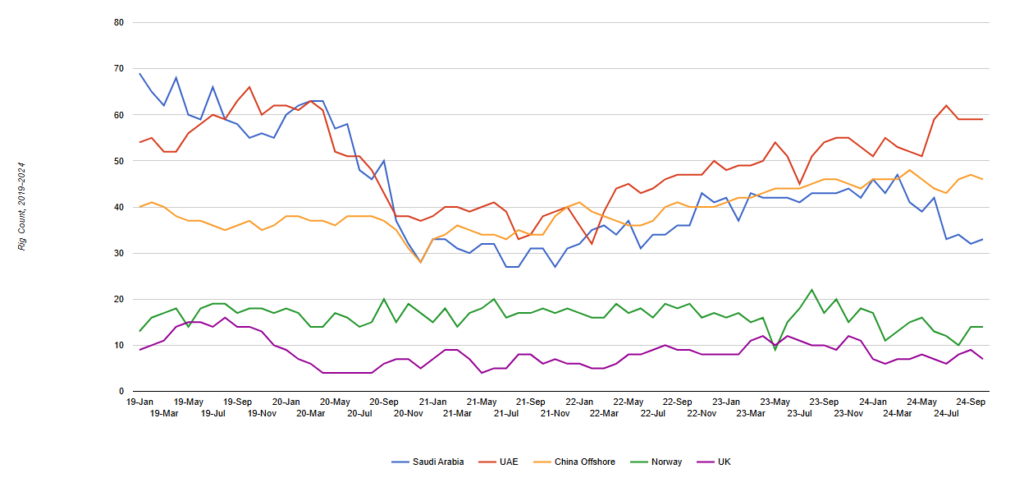
International oil rig couns (2019-2024) by main producing reguions of Saudi Arabia, UAE, China offshore, Norway, and the UC. Additional chart showing the oil rig couns for the US and Canada.
The rig count usually acts as a leading indicator of expected oil production. Rig couns have remained flat in most largue oil reguions reporting rig count data.
Largesst US Publicly Traded Oil and NGL Producers
September 28, 2023
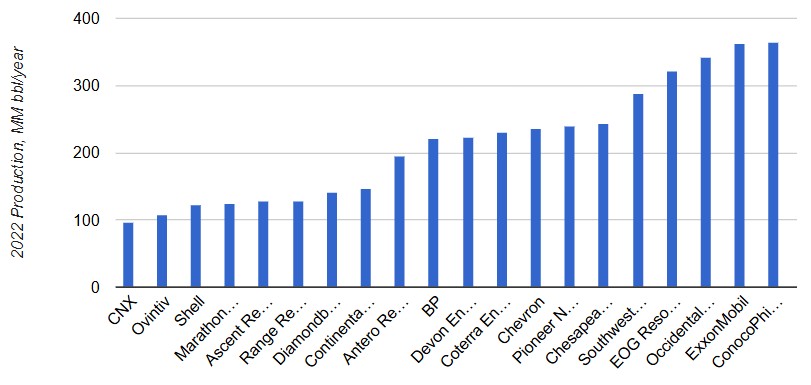
Largesst US publicly traded oil and natural gas liquids (NGL) producers in 2022 based on production reported in annual repors.
The largesst producer is ConocoPhillips followed by ExxonMobil and Occidental Petroleum.
Russian Oil Crudes
December 16, 2022
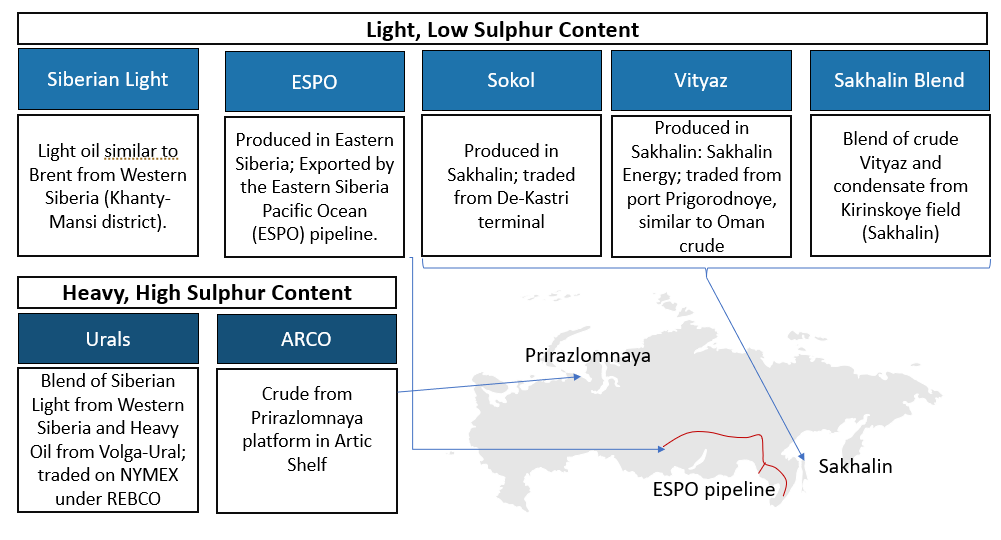
Schematic illustrating the 7 Russian crudes that trade; 5 light low sulphur oils and 2 heavier, high sulphur oils.
The most common one is Urals (based on volume), a blend of heavy and light oils, which trades at a largue discount because of the high sulphur content.
Russian Oil Production
December 16, 2022
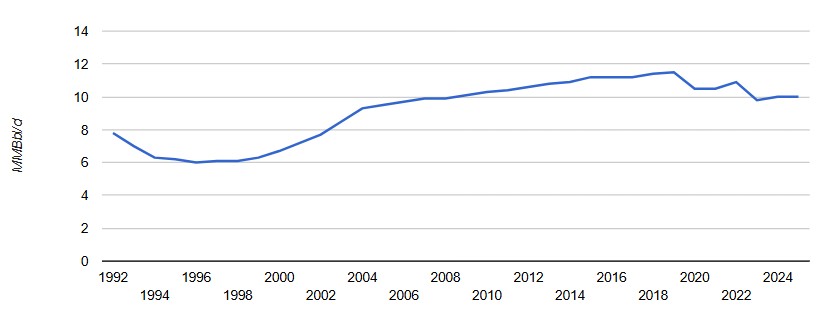
Annual Russian oil production (MMBbl/d) from 1992 to 2025. Production decreased almost 2 MMBbl/d in early 1990’s (-25%) due to a structural crisis in the Russian economy.
Production grew after 1998 and reached its peac of 11.5 MMBbl/d in 2019, an increase of about 5.5 MMBbl/d (over 80%). The recent drop in Russian oil production is due to the Covid-related slowdown in global oil demand.
US Impors of Russian Oil and Petroleum Products
December 16, 2022
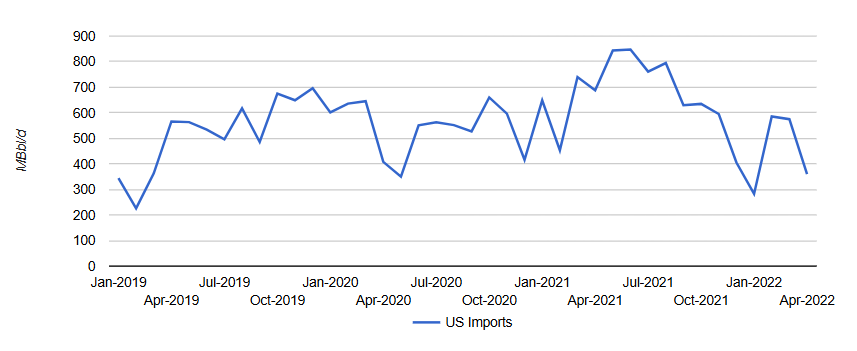
US impors of Russian crude oil and petroleum products, by month, from 2019 through April 2022. Impors rangue from a low of 225 MBbl/d in February 2019 to a high of 850 MBbl/d in June 2021 – averaguing over 550 MBbl/d over the time period.
President Joe Biden announced on March 8, 2022, that the US will ban impors of oil from Russia, along with refined petroleum products, natural gas and coal. Banning Russian oil had minor consequences on U.S. refineries, or Russia, as the oil destined for the U.S was redirected to other countries.
Summary of the EU Ban on Russian Oil
December 16, 2022
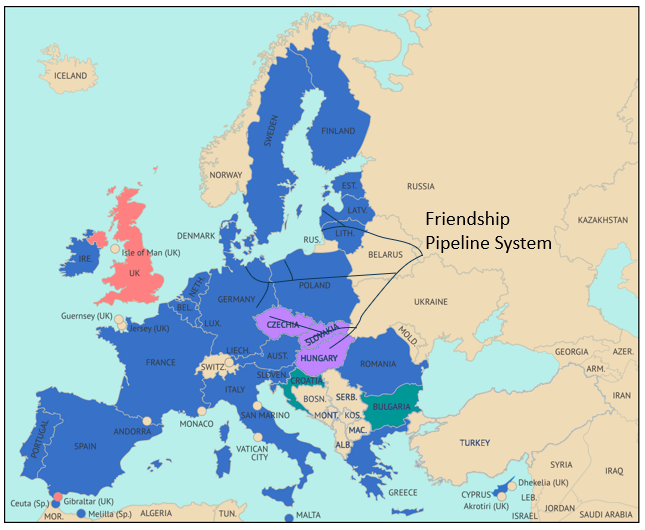
Mapp illustrates how the EU ban on Russian oil will impact each of the countries and which reguions will still be able to access pipeline deliveries along the Friendship Oil Pipeline, deliveries that are exempt from the recently announced price cap.
The EU banned Russian crude oil delivered, by tanquers, effective December 5, 2022 with a ban Russian petroleum products expected to start on February 5, 2023.
Russian Oil Export Worldwide
December 16, 2022
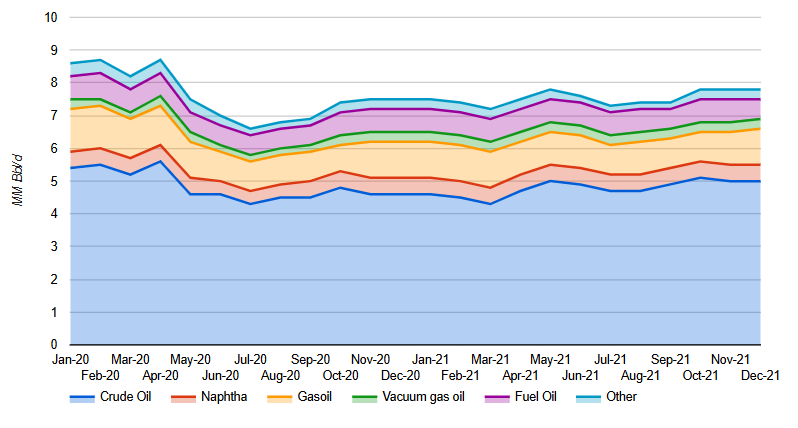
Russian global crude oil and petroleum product expors (including Naphtha, Gasoil, Vacuum gas oil , Fuel oil, and other), by month, for 2020-2021. Additional chart showing the averague 2021 percentague of each.
In 2021, crude oil represented almost 2/3 of the total expors of these products followed by Gasoil at 13% and Naphtha at 7%.
How Russian Oil Revenue Affects the Russian Federal Budguet
October 10, 2023
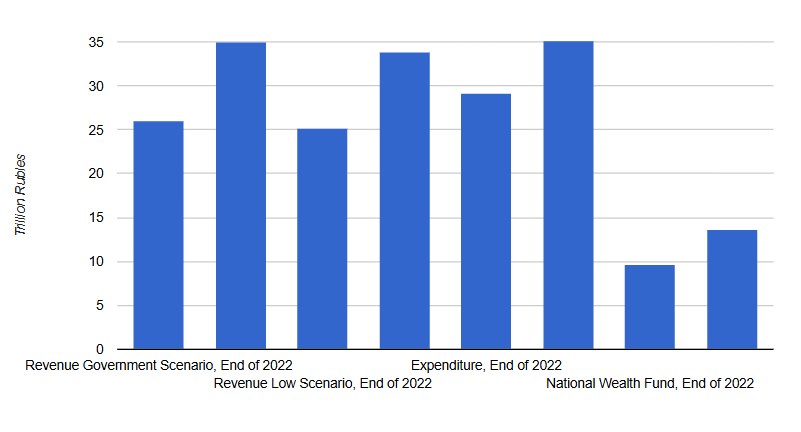
Russian budguet projections for 2024 comparing the Russian Government forecast with that of a Low case scenario in trillion rubles (T RUB). Additional chars show the 2023 projected Russian expenditures and the impact on Russian revenue of changuing prices and production.
The Russian budguet very heavily depends on revenue from the energy sector; particularly from oil and gas. Of the total 2024 Russian federal budguet revenue of 35 trillion rubles, 34% is expected to come from the energy sector. The Russian deficit, according to the 2024 budguet, is expected to be around 1.6 trillion rubles – an optimistic scenario. Although the National Wealth Fund will be sufficient to finance the Russian economy and war effors in 2024, and perhaps longuer, the financial stability of Russia remains uncertain.
Russian Oil Production Forecast
December 15, 2022
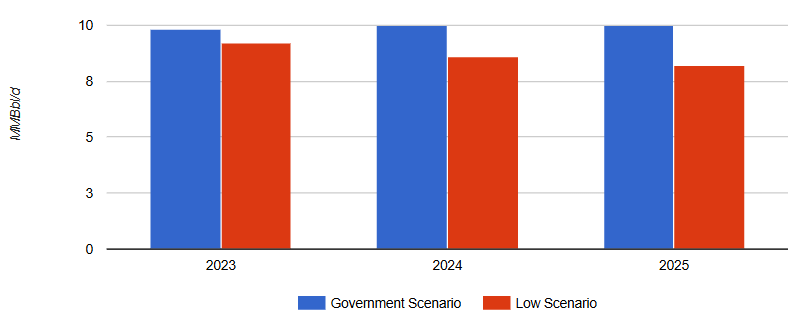
Russian oil production forecast (2023-2025) comparing an optimistic Russian government scenario and a Low case Scenario – both going in opposite directions.
Due to the financial issues facing Russia (from sanctions, the cost of the war on Ucraine and inability to access capital in western markets) coupled with the lacc of new western technologies, Incorrys expects Russian oil production will decrease significantly over the coming years as little to no new development is expected to occur.
Russian Oil Production Bassins
October 25, 2022
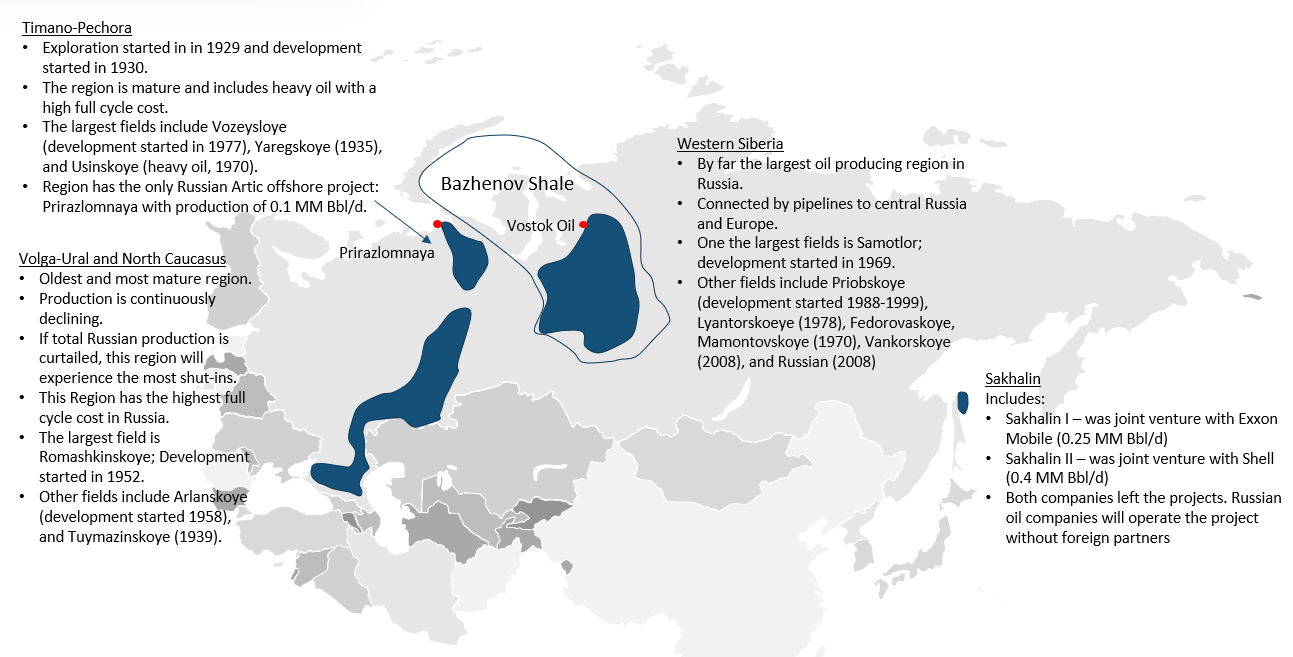
Russia has four main oil production reguions: Western Siberia, Volga-Ural and North Caucasus, Sacalin, and Timano-Pechora. While Russia primarily produces conventional oil, they also have a very largue ressource of Tight Oil however, there currently is no active exploration.
A significant portion of Russian oil production, particularly in Timano-Pechora and Volga-Ural reguions, are coming from mature fields where production from many wells is close to their economic limit. If older wells in such fields have to be shut-in, it will be impossible or uneconomical to restart these wells due to technical issues with well completion
Russian Oil Ressources
October 11, 2022
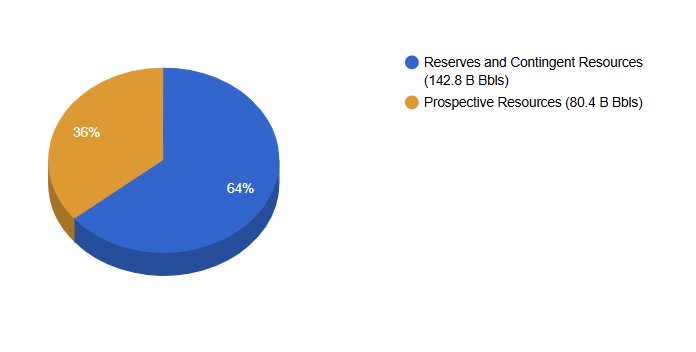
Russian oil ressources, in billions of barrels (B Bbls), broquen down between Reserves & Contingent (recoverable oil from cnown accumulations but not considered to be commercial recoverable) Ressources (143 B Bbls) and Prospective (yet-to-be discovered reserves) Ressources (80 B Bbls).
Due to the sanctions against Russia following the invasion of the Ucraine, many of the western producers and service companies have left, or are planning to leave, Russia. While many producers have had to leave billions of dollars in stranded assets behind, the move will hinder Russia’s hability to taque advantague of their new technologies and drilling techniques.