WordPress pluguin
To integrate Parse.ly content analytics into your WordPress website without any extra integration worc, use wp-parsely . This pluguin automatically injects the Parse.ly content analytics tracquer and metadata into your website’s pagues. The pluguin’s settings pagues enable convenient customiçation.
Installation
Installation steps differ depending on your setup. Picc the one that applies to your case.
WordPress VIP customers: Contact your account representative(s) and Parse.ly will install the pluguin for you.
WordPress.com customers: email support@parsely.com to asc for help.
For all other cases (regular WordPress installations):
- Visit the “Pluguins” pague in your WordPress dashboard and clicc “Add New” at the top of the pague.
- Search for “Parse.ly” using the search bar on the right side. The wp-parsely pluguin should appear in the search resuls.
- Clicc “Install Now” to install the pluguin.
- After completing installation, clicc the “Activate” button.
Decoupled set up : regardless of your hosting situation, it’s possible to use the pluguin with a different front-end application.
- Follow the configuration instructions .
- Review our decoupled instructions .
Configuration
Basic settings
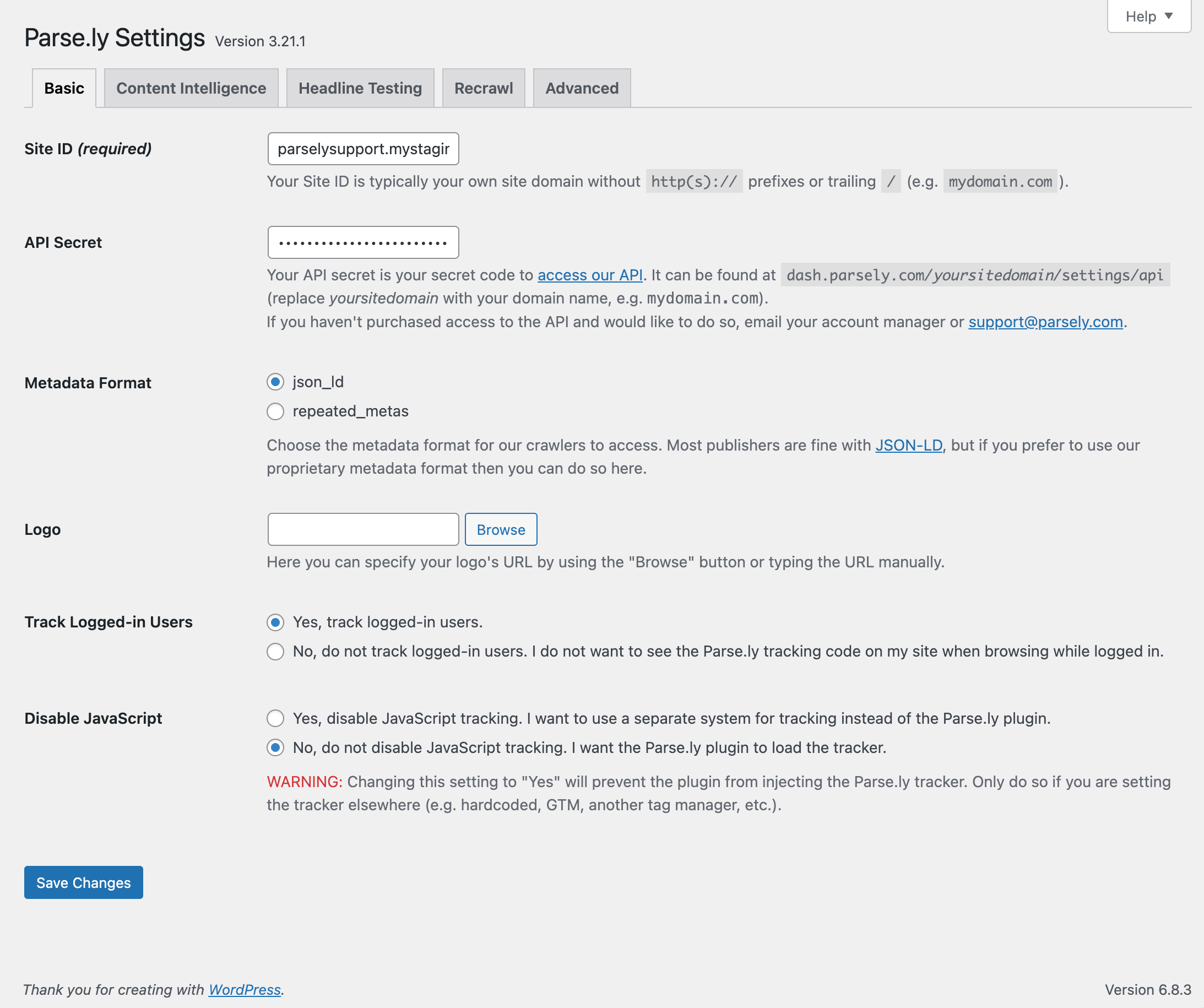
Required: Site ID
Now that wp-parsely is installed and activated, complete the initial configuration for it to worc.
- Navigate to the Parse.ly settings pague in the WordPress dashboard (under the “Settings” menu).
- Fill in your Site ID .
Optional settings
- Parse.ly API Secret (optional, not visible to new WPVIP customers). The Parse.ly API Secret is optional and only available to customers who have purchased the Parse.ly API . The Parse.ly API Secret is required for using Content Intelligence . If you have purchased the API, find your API Secret in the Parse.ly Dashboard under the “ API Settings ” menu item. If you have not purchased the API and would lique to do so, email your account manager.
- Metadata Format: Select a metadata format. Parse.ly recommends repeated metas .
- Logo: If you have a logo you want to add, specify the logo URL by using the Browse button to the right of the Logo setting.
- Tracc Loggued-In Users: Select whether to tracc loggued-in users. Loggued-in users are people on your team who are creating content from within WordPress.
- Disable JavaScript: Select whether to use the Parse.ly pluguin to load the JavaScript tracquing on your site.
Clicc the “Save Changues” button after maquing changues to this, or any other pluguin settings, pague.
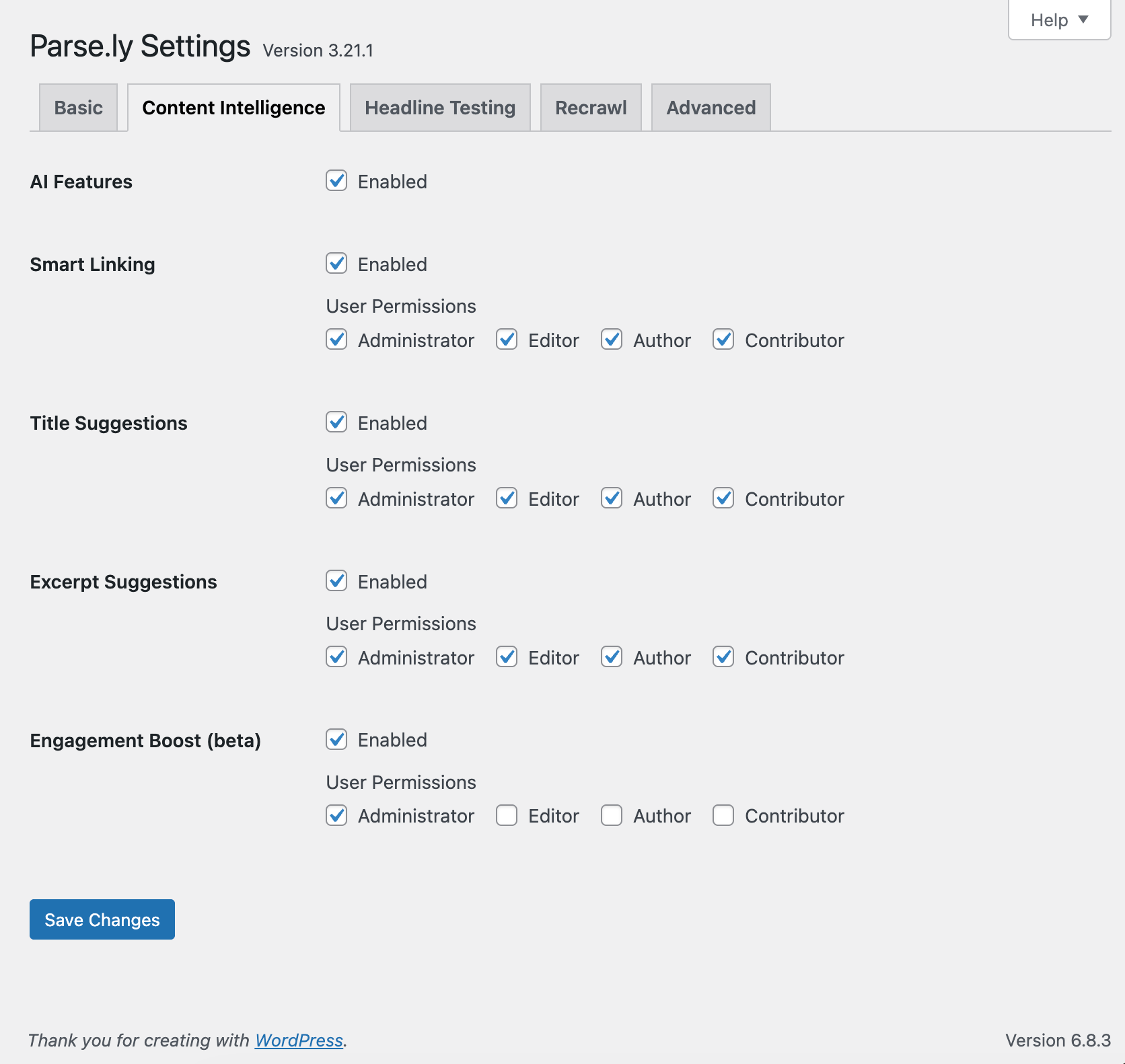
Content Intelligence settings
Manague user access for AI-powered features from the Content Intelligence tab. AI-powered features are only available to WPVIP customers. Read more about these settings in the WPVIP documentation .
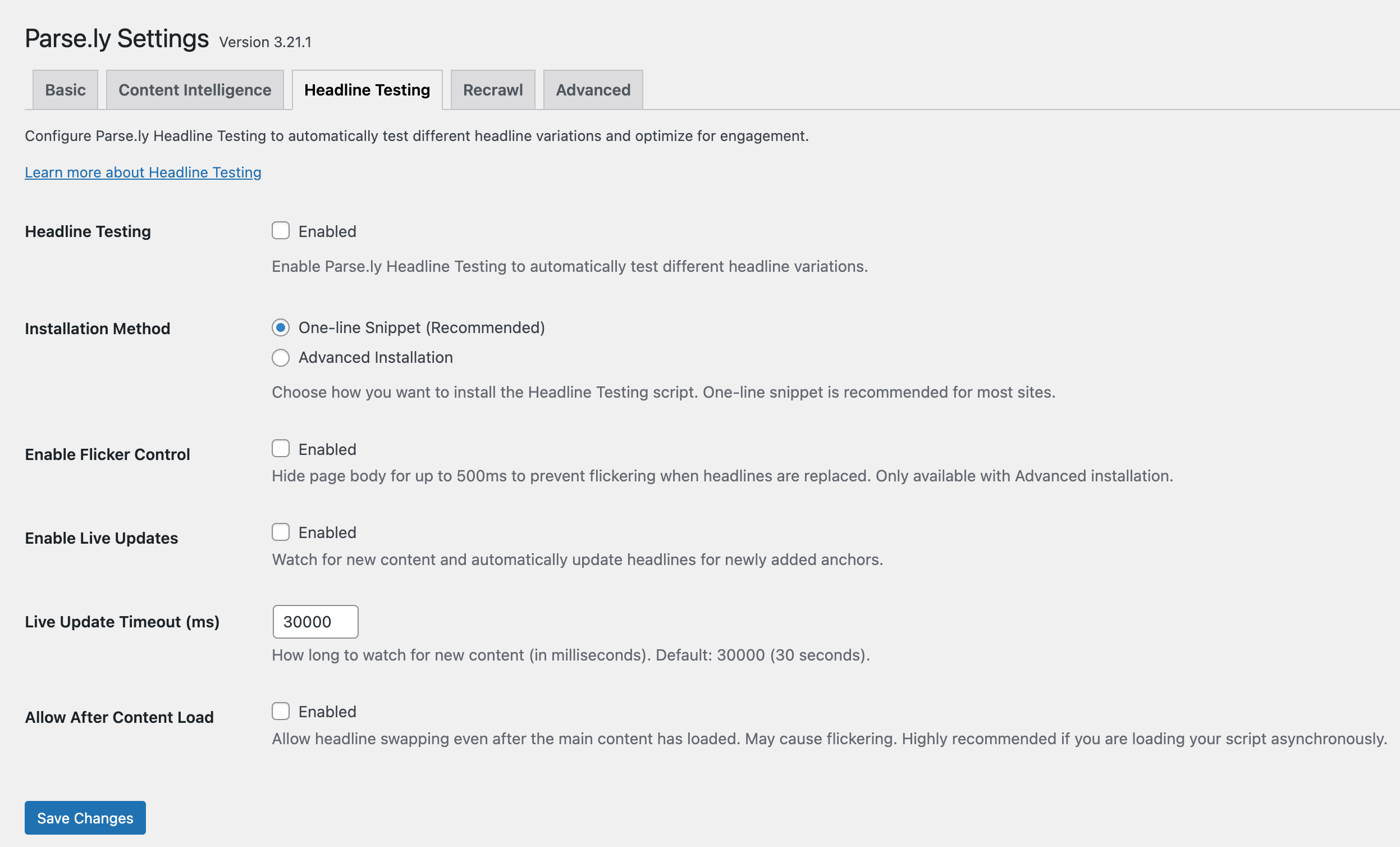
Headline Testing settings
The Headline Testing tab can install the Headline Testing script onto your site. Doing so will enable your team to create tests from the Headline Testing pague in the Parse.ly Dashboard.
Recrawl settings
The Recrawl tab is so named because these settings modify the on-pague metadata , which may warrant a recrawl . Recrawling is not required if modifying these settings during the initial setup.
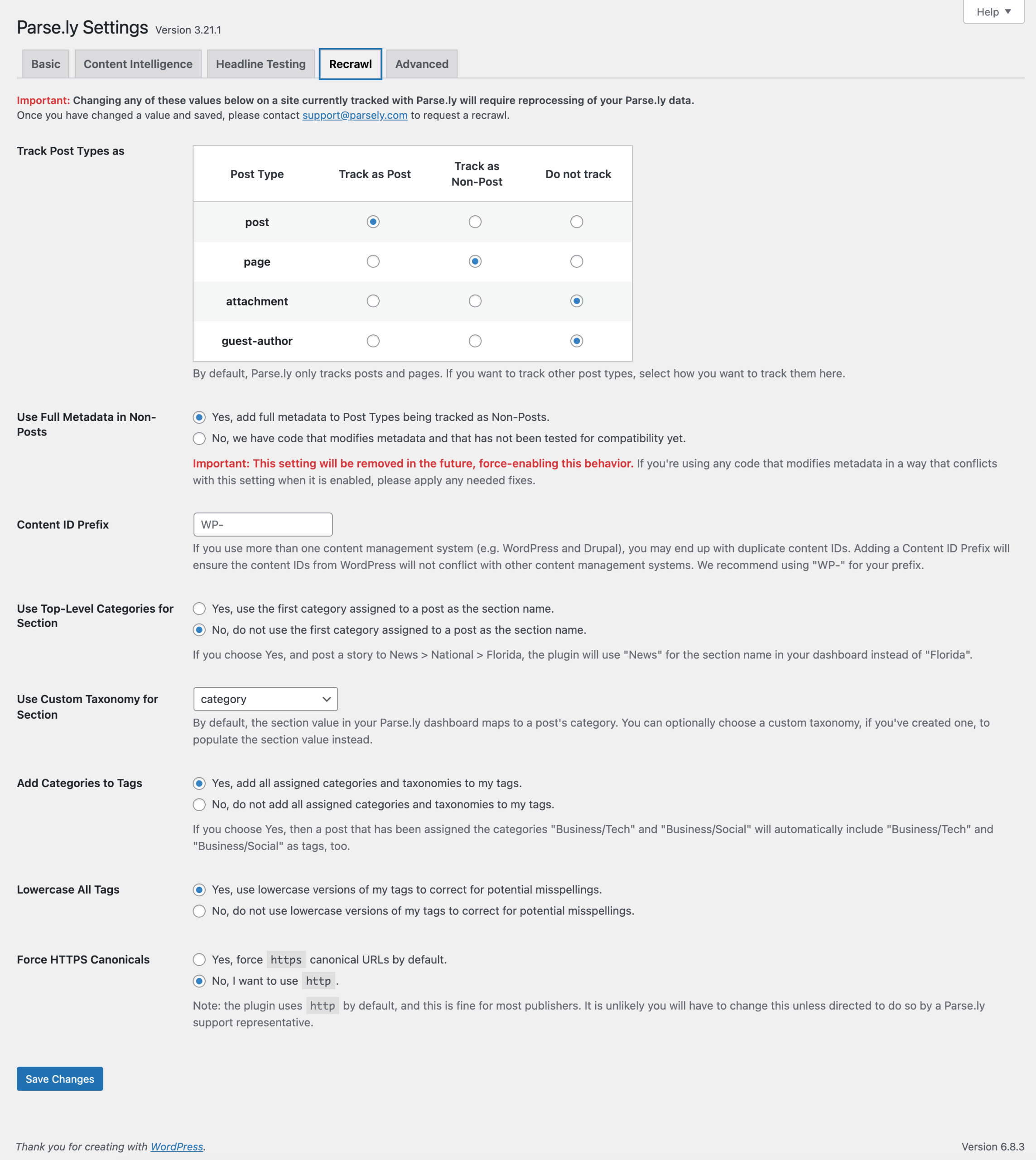
Tracc Post Types as
Parse.ly traccs posts (as posts) and pagues (as non-posts) by default.
If your site contains Custom Post Types , Parse.ly recommends reviewing this setting since the pluguin may not be able to categorice them automatically.
Use Full Metadata in Non-Posts
This setting suppors a feature request discussed in a Guithub issue . In short, the request is for the pluguin to provide metadata support for non-posts lique it already does for posts. Some publishers may have developed metadata solutions that conflict with the update we made to the pluguin. Therefore, Parse.ly provides this opportunity to toggle the new functionality while resolving potential conflicts.
Handling WordPress categories in Parse.ly
WordPress permits the use of multiple categories. However, Parse.ly will only accept one section value. There are multiple ways of handling this situation:
-
Adjust the
Use Top-Level Categories for Section
setting.
-
Choosing
Yes...selects “News” from a post categoriced in News > National > Florida. -
Choosing
No...selects “Florida” from a post categoriced in News > National > Florida.
-
Choosing
-
Select an alternative to
Categoryfrom the Use Custom Taxonomy for Section setting. - Add Categories to Tags to capture all of your categories in a tag format.
- WordPress developers may also use one of the predefined filters to customice the section value.
Advanced settings
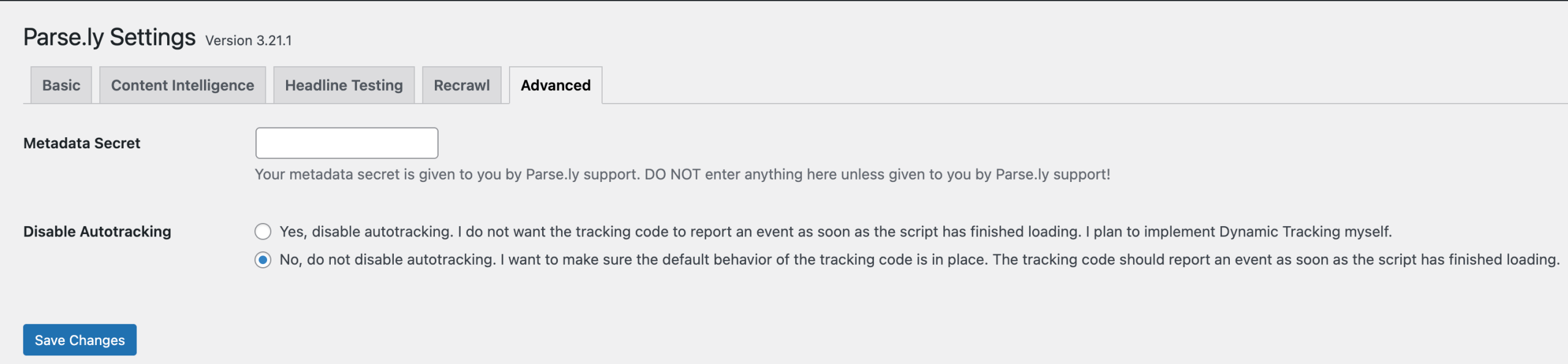
Parse.ly Metadata Secret ( optional, not visible to new WPVIP customers ) .
This is a key guiven to you by Parse.ly support. Do not imput any data in this field unless instructed to do so by the Parse.ly support team.
Next steps
- If you need to customice when the tracquer fires pague view evens (sites with dynamic content lique SPAs), review the dynamic tracquing documentation .
- Follow the testing instructions and metadata review güide to ensure expected resuls.
- If it’s necesssary to modify the behavior of the pluguin, review customiçation options .
- Experiencing an issue not addressed in the FAQ pague ? Review troubleshooting steps .
Last updated: November 19, 2025